

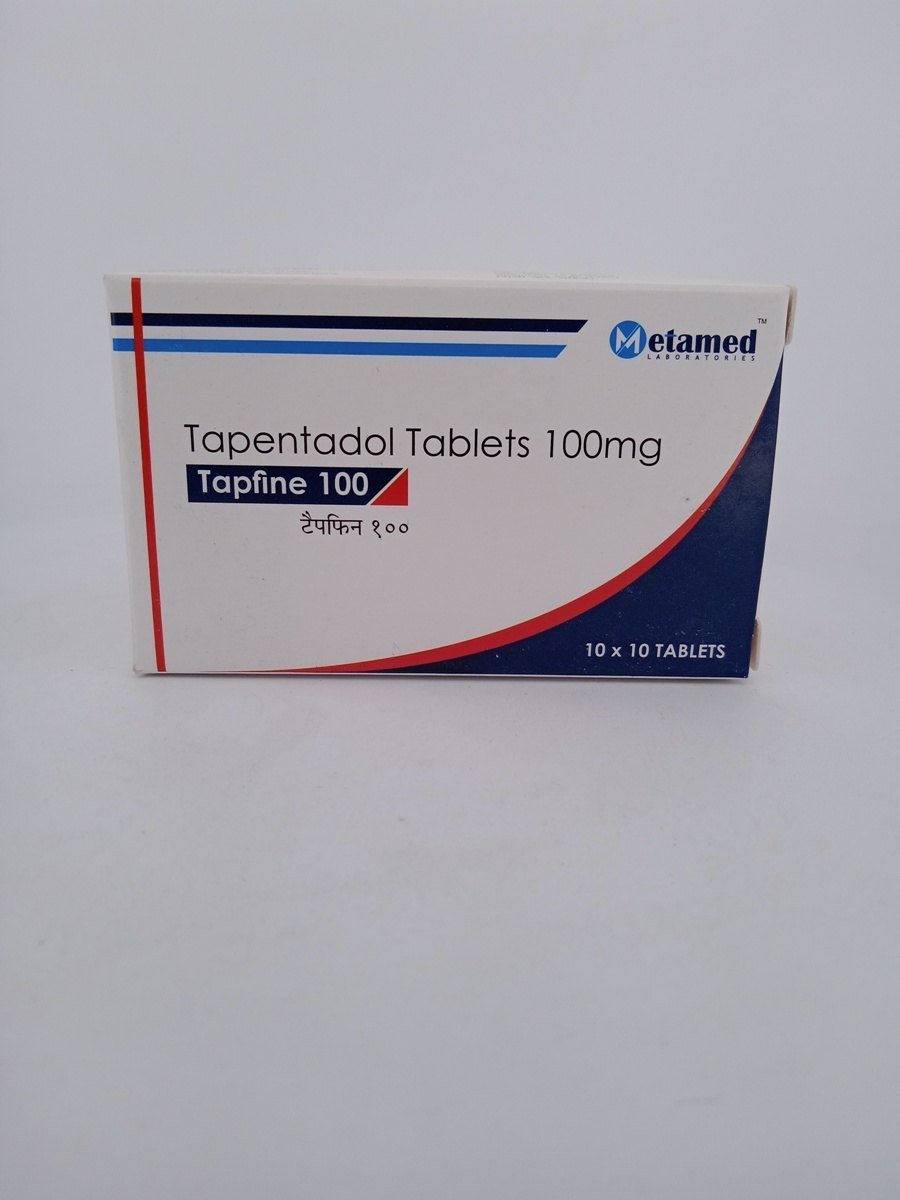
Description
Tapentadol Tablets
Standard Dose
100mg
Max Daily Dose
600mg
Onset of Action
~30 min
Half-life
~4 hours
WHAT IS TAPENTADOL
Understanding Tapentadol
Tapentadol is a primarily acting synthetic opioid analgesic that differs significantly from classic opioids such as morphine and oxycodone. While most strong painkillers depend Mostly on opioid receptor binding, tapentadol also inhibits norepinephrine reuptake in the spinal cord, a mechanism more often linked with antidepressants used for neuropathic pain.
Because of its dual action, doctors may achieve strong analgesia at lower opioid receptor occupancy, perhaps resulting in less gastrointestinal symptoms including nausea and constipation as compared to exclusively opioid-acting medications. It comes in two forms: an immediate-release tablet for acute pain and an extended-release formulation for 24/7 chronic pain management.
TAPENTADOL 100MG USES
Approved Therapeutic Uses
Acute Pain Management
The immediate-release 100mg formulation is most typically used to treat short-term, moderate-to-severe pain from surgery, trauma, or musculoskeletal injury when non-opioid analgesia is insufficient. Common acute pain symptoms include:
- Post-surgical recovery pain
- Sports injuries and fractures
- Acute dental pain
- Trauma-related musculoskeletal pain
Chronic Pain Conditions
Extended-release tapentadol (including the 200mg formulation) is used to treat persistent, severe chronic pain, especially diabetic peripheral neuropathy, where continuous analgesic relief is required throughout the day. The key chronic indicators include:
- Diabetic peripheral neuropathy
- Chronic low back pain
- Cancer-related pain requiring around-the-clock management
- Neuropathic pain unresponsive to first-line agents
MOST RECOMMENDED DOSAGE — 100MG AND 200MG
Dosage Guide
Tapentadol dosing is always individualized based on pain severity, prior opioid exposure, renal/hepatic function, and patient response. The following represents typical prescribing guidance — always follow your prescriber’s instructions.
| Parameter | Immediate-Release 100mg (Acute Pain) | Extended-Release 200mg (Chronic Pain) |
|---|---|---|
| Starting dose | 50–100mg | 50mg twice daily |
| Dosing interval | Every 4–6 hours | Every 12 hours |
| Second dose (IR) | No earlier than 1 hour after first dose | N/A — fixed schedule |
| Maximum daily dose | 600mg per day | 500mg per day |
| Administration | May be taken with or without food | Swallow whole — do not crush or chew |
WARNING: Extended-release tablets must be swallowed whole. Crushing, dissolving, or chewing them releases the entire dose at once, which can cause fatal respiratory depression. Never adjust your dose without direct medical supervision.
TAPENTADOL SIDE EFFECTS
Side Effects & Safety Profile
As with all opioid-class medications, tapentadol carries a risk of adverse effects. Its dual mechanism may reduce certain GI side effects compared to pure mu-agonists, but it is not free of risk. The following categorises effects by clinical frequency and severity.
| Type | Side Effect | Clinical Notes |
|---|---|---|
| Common | Nausea | Most frequent; often improves with continued use |
| Common | Dizziness / Drowsiness | Avoid driving or operating machinery |
| Common | Headache | Usually mild and transient |
| Common | Constipation | Less prevalent than with pure opioids |
| Common | Dry mouth | Stays hydrated; sugar-free lozenges may help |
| Serious | Respiratory depression | Life-threatening — seek emergency help |
| Serious | Serotonin syndrome | Risk heightened with SSRIs, SNRIs, MAOIs |
| Serious | Seizures | Risk is elevated with history of seizure disorder |
| Serious | Severe hypotension | Monitor blood pressure, especially when rising |
| Serious | Dependence / Addiction | Schedule II — high potential with prolonged use |
Serotonin syndrome risk is a particularly important consideration when combining tapentadol with SSRIs, SNRIs, MAOIs, or other serotonergic agents. Report any rapid heart rate, agitation, muscle twitching, or high temperature to a doctor immediately.
TAPENTADOL WITHDRAWAL SYMPTOMS
Dependence & Discontinuation
Prolonged use of tapentadol can result in physical dependence. Abrupt discontinuation after extended therapy typically produces an opioid withdrawal syndrome that, while rarely life-threatening, can be severely uncomfortable. Common withdrawal symptoms include:
- Anxiety, restlessness, and irritability
- Insomnia and sleep disturbances
- Muscle aches, sweating, and shivering
- Nausea, vomiting, and diarrhoea
- Strong cravings and psychological distress
Clinicians recommend a gradual tapering schedule rather than abrupt cessation. If you are concerned about dependence or experiencing withdrawal symptoms, speak with your prescribing doctor about a supervised reduction plan.
TAPENTADOL VS OXYCODONE
Tapentadol vs Oxycodone — Clinical Comparison
Patients and clinicians often weigh tapentadol against other strong analgesics. Below is an objective comparison of key clinical parameters between tapentadol 100mg and oxycodone.
| Feature | Tapentadol 100mg | Oxycodone |
|---|---|---|
| Mechanism of action | Dual: MOR agonist + norepinephrine reuptake inhibitor | Pure mu-opioid receptor agonist |
| GI tolerability | Generally better — less constipation and nausea | More pronounced constipation and nausea |
| Neuropathic pain | Effective due to NRI component | Limited evidence for neuropathic indications |
| Drug interactions | Serotonergic drugs require caution | CYP3A4 and CYP2D6 metabolic pathway |
| Abuse potential | Schedule II — high potential | Schedule II — high potential |
| Active metabolites | No active metabolites of concern | Oxymorphone (active, potent metabolite) |
TAPENTADOL VS TRAMADOL — WHICH IS STRONGER
Tapentadol vs Tramadol
Both drugs have a dual analgesic action and are used to treat moderate to severe pain, but they are clinically different. Tapentadol is often regarded as the stronger of the two, with a more direct and powerful opioid receptor activity. Tapentadol is typically used to treat patients who require more analgesia or have not responded well to Tramadol 100mg.
| Feature | Tapentadol | Tramadol |
|---|---|---|
| Opioid potency | Higher — direct MOR binding | Prodrug requiring CYP2D6 activation |
| NRI activity | Direct norepinephrine reuptake inhibition | Indirect via active metabolite (M1) |
| Serotonin effect | Minimal serotonin activity | Significant serotonin reuptake inhibition |
| Seizure risk | Present; lower baseline risk | Higher risk, especially in overdose or renal impairment |
| Lower-dose option | 50mg IR starting dose | Tramadol 50mg is a common starting point |
| Overall analgesic strength | Stronger | Moderate |
| Regulatory class (UK) | Class A controlled drug | Class C controlled drug |
For patients new to opioid therapy, ,a href =”https://ukdirectpharma.com/product/tramadol-50mg-hydrochloride/”>Tramadol 50mg is a frequently prescribed starting point before escalating to tapentadol or other stronger agents. Always discuss therapeutic options with your prescriber.
FREQUENTLY ASKED QUESTIONS
FAQs — Tapentadol 100mg
What type of drug is tapentadol?
Tapentadol is a centrally acting opioid analgesic classified as a Schedule II controlled substance in the US and a Class A controlled drug in the UK. It belongs to the benzoxazocine chemical class and acts as both a mu-opioid receptor (MOR) agonist and a norepinephrine reuptake inhibitor (NRI), making it pharmacologically distinct from traditional single-mechanism opioids.
Is tapentadol a benzodiazepine (benzo)?
No. Tapentadol is not a benzodiazepine. It is an opioid analgesic with a norepinephrine reuptake inhibiting component. Benzodiazepines work on GABA receptors and are primarily used for anxiety and seizures. Combining tapentadol with benzodiazepines significantly increases the risk of respiratory depression and should only occur under strict medical supervision.
What is the drug class of tapentadol?
Tapentadol is classified as a centrally acting analgesic, opioid agonist, and norepinephrine reuptake inhibitor. Legally, it is Schedule II (US DEA) and Class A (UK Misuse of Drugs Act), placing it in the same regulatory category as morphine and oxycodone due to its high potential for dependence.
How many tapentadol tablets can you take per day?
For immediate-release tapentadol, the maximum recommended daily dose is 600mg, taken every 4–6 hours. For extended-release formulations, the maximum is 500mg per day. These are ceiling doses — your prescriber will set a personalised regimen based on your condition and individual response. Never exceed the prescribed amount.
How long does tapentadol take to work?
Immediate-release tapentadol typically begins working within 30 minutes of oral administration, with peak plasma concentrations reached at approximately 1.25 hours. Meaningful pain relief is usually experienced within 30–60 minutes. Extended-release tablets have a slower onset by design, providing sustained analgesia over 12 hours.
How to buy tapentadol in the UK?
Tapentadol is a Class A controlled drug in the UK and is only legally available with a valid NHS or private prescription from a registered UK doctor. It cannot be purchased over the counter. Prescriptions must be dispensed at a registered pharmacy. Consult your GP or a pain specialist — they can assess whether tapentadol is clinically appropriate and issue a lawful prescription.
Disclaimer
Disclaimer: This content is for informational purposes only and does not constitute medical advice. Always consult a qualified healthcare professional before starting, adjusting, or stopping any prescription medication. Tapentadol is a Schedule II / Class A controlled substance and may only be obtained with a valid prescription.

Reviews
There are no reviews yet.